Electric Hoist Safety Standards: Compliance Requirements for Global Industrial Use
KAMOME
1/24/20261 min read
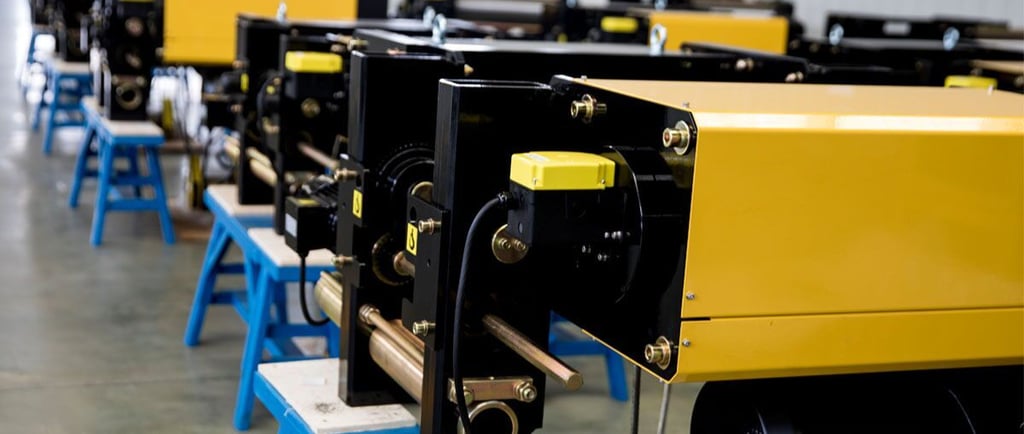
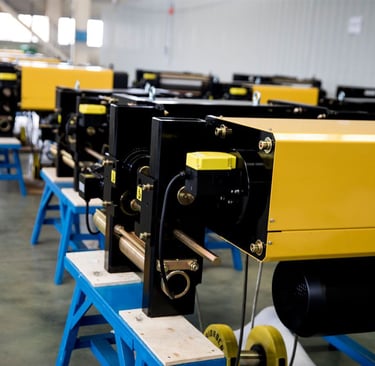
Compliance with electric hoist safety standards is critical for industrial businesses worldwide—it protects workers, prevents accidents, and ensures legal operation. Different regions have specific regulations, but core safety principles apply globally. Below is a concise guide to key standards and compliance requirements for electric hoists.
In the EU, electric hoists must meet CE certification requirements, the “passport” for legal market access, which is based on the MD 2006/42/EC machinery directive and core EN standards like EN 14492-1 and EN 14492-2. This includes adhering to LVD (low-voltage directive) and EMC (electromagnetic compatibility) directives, plus specific safety demands: hoists over 1000Kg need overload limiters, emergency stop buttons must cut power directly, and electrical enclosures must reach IP55 protection. Manufacturers must compile detailed technical files (including material lists and test reports), pass type tests by qualified institutions, and sign a conformity declaration before affixing the CE mark.
North America follows ANSI/ASME standards (e.g., ANSI/ASME B30.16 for electric hoists), focusing on load capacity, braking systems, and structural integrity. OSHA also mandates regular inspections, operator training, and maintenance records to ensure compliance and workplace safety.
Globally, IEC standards (e.g., IEC 60664) set uniform electrical safety criteria, while China’s GB standards (such as GB 6067.1) outline design and usage requirements for domestic and export markets. For all regions, rated load compliance, regular testing (static and dynamic load tests), and proper grounding are non-negotiable.
Key compliance steps: Choose certified hoists, maintain detailed safety records, train operators to handle equipment properly, and conduct periodic inspections (annual professional checks recommended). For hazardous environments, additional explosion-proof or high-temperature safety features may be required.
Non-compliance risks fines, product recalls, and safety incidents. By aligning with regional and global standards, businesses ensure safe, legal, and efficient electric hoist operations worldwide.